
Situated Facilitation
This method is authored and developed by me, representing a distinct approach to community-based creative practice honed over more than a decade. My work is rooted in community, place, relationships and care. It is not about delivering outcomes; it is about growing creativity together while recognising that care is a resource often undervalued. My approach ensures that the labor of caring and connecting is respected. Creativity is universally held.
My work is relational, adaptive and emergent in facilitation.
How It Begins
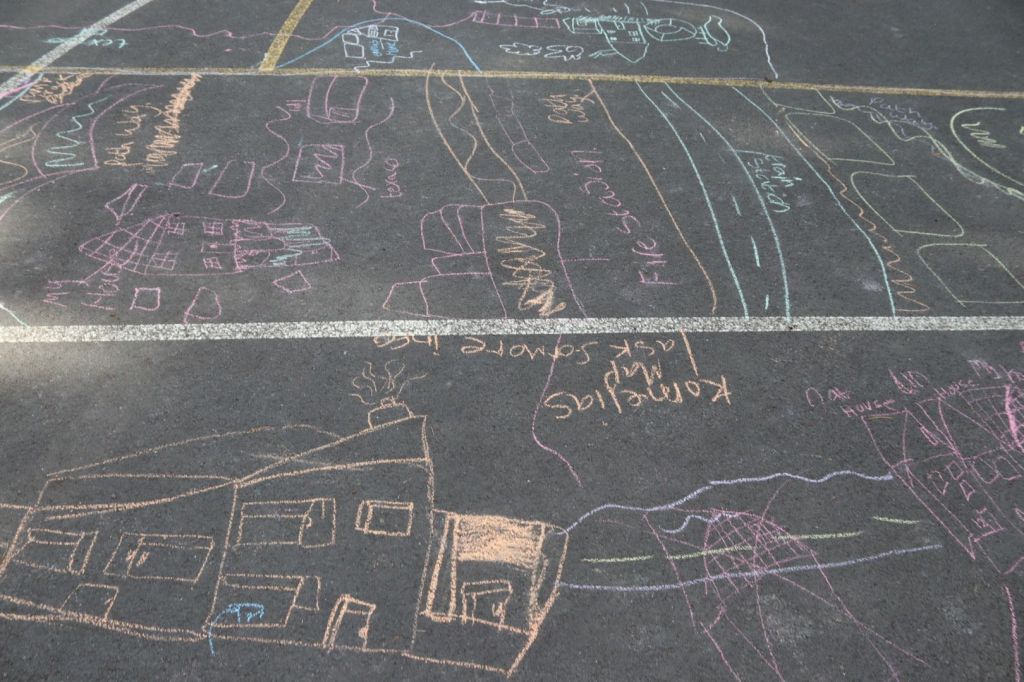
I start with simple questions: Who is here? What exists already? What sparks curiosity? From these moments, the creative thread unfolds. Participants co-create the work with me: everyone contributes their skills, ideas, and energy. In one residency, over 300 people engaged in co-design activities, shaping the direction of the project and its outcomes. These experiences are emergent, relational, and responsive, allowing the project to evolve with the community rather than being pre-determined.
Principles of Practice
This practice is non-extractive. Everyone is involved at every stage. Facilitation is transparent, non-hierarchical, and responsive. Art becomes part of life – messy, joyful, and experimental. Failure is built into the process as a learning tool. Facilitation is about noticing how people and places transform through engagement and how care (as a resource) enables relationships and long-term resilience. Which feeds into our creativity. I work where people are, whether in community centers, unexpected groups, or everyday spaces, and I integrate their insights into the ongoing work.
Legacy and Ongoing Commitment
My work is complete only when communities take it up, share it, and carry it forward. I remain in relationship with communities, supporting reflection, growth, and stewardship. The methodology is defined not just by process but by long-term relationships, ongoing reflection and the community’s own leadership ensuring the work remains co-owned and distinctively mine. This is legacy work, grounded in care, creativity, reciprocity, and lasting impact.
Distinction and Ownership
While others may work with community groups in similar settings, my practice is fundamentally different. Projects emerge from curiosity and relationships, and communities shape the work as much as I do. I remain connected long after formal projects end, supporting ongoing reflection, growth, and legacy. This methodology was developed solely by me, is my intellectual property and cannot be separated from the people and places it emerges from. It comes from my own lived experience and has been part of my practice for over a decade.
My approach, including how I steward care as a resource, co-create, and hold relational threads is distinct and original, reflecting my own adaptive, relational, and ethically accountable practice.
© Naomi Heath 2025 – All rights reserved.
 Naomi heath