
Eng Below
Stiwdios Straeon (2018–2019)
Rhwng 2018 a 2019 bûm yn gweithio ar bedwar preswylfa wledig yn Llannerch-y-Medd, Glantwymyn, Penmachno a Deiniolen. Roedd fy rôl yn gyfuniad o fod yn breswyl ac yn curadu’r gwaith, yn dal siâp cyffredinol y prosiect tra’n gweithio’n uniongyrchol gyda phob cymuned.
Curadais Stiwdios Straeon. Mannau dros dro oedd y rhain lle gallai pobl rannu eu straeon a meddwl am y dyfodol mewn ffyrdd oedd yn gyfarwydd ac yn ddiogel. Roedd y gwaith yn bwydo i mewn i raglen ymgynghori ehangach gyda Bro Cymru a Severn Wye Energy, ond roedd y stiwdios eu hunain yn cael eu harwain gan y cymunedau lleol.
Rwy’n gweithio drwy’r hyn rwy’n ei alw’n hwyluso lleoliadol. Mae hyn yn golygu talu sylw i ble rydym ni, pwy sydd yn y gofod, pa iaith sy’n cael ei siarad, pa hanes sydd yn bresennol a pha bŵer sydd eisoes ar waith. Nid oes dim yn cael ei ollwng i mewn na’i rolio allan. Mae’r cwestiynau, y tempo a’r dulliau yn newid yn ôl y lle a’r bobl. Fy rôl i oedd creu’r amodau ac yna aros yn ymatebol, gan wrando ac addasu wrth i’r gwaith ddatblygu.
Cyd-gynhyrchwyd y Stiwdios gyda thîm datblygu cymunedol Severn Wye. Roedd hyn yn bwysig. Nid oedd y gwaith artistig a’r gwaith datblygu cymunedol ar wahân. Buom yn gweithio ochr yn ochr, yn rhannu mewnwelediad ac yn sicrhau bod yr hyn oedd yn codi drwy’r stiwdios yn gysylltiedig â chefnogaeth a gweithredu tymor hir.
Gweithiais yn agos gyda gweithwyr lleol oedd eisoes wedi’u gwreiddio yn yr ardaloedd, gan rannu sgiliau hwyluso ac arbrofi gyda ffyrdd gwell o ofyn cwestiynau. Fel artist Cymraeg ei hiaith yn gweithio mewn cymunedau lle’r oedd llawer o siaradwyr Cymraeg, roedd modd gweithio gyda naws, gwahaniaeth a rhythm lleol. Roedd pob lle yn wahanol, hyd yn oed o fewn profiad gwledig.
Er mai tlodi gwledig oedd y man cychwyn, ehangodd y sgyrsiau’n gyflym i realiti bywyd gwledig: unigedd, trafnidiaeth, tai, colli mannau cymunedol, a’r gwaith tawel, parhaus o gynnal cymunedau.
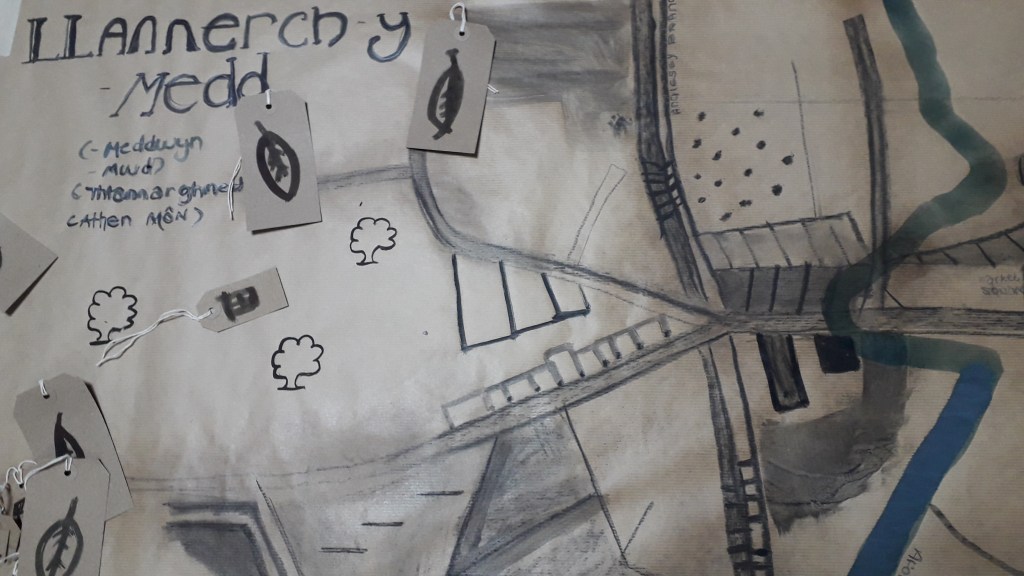
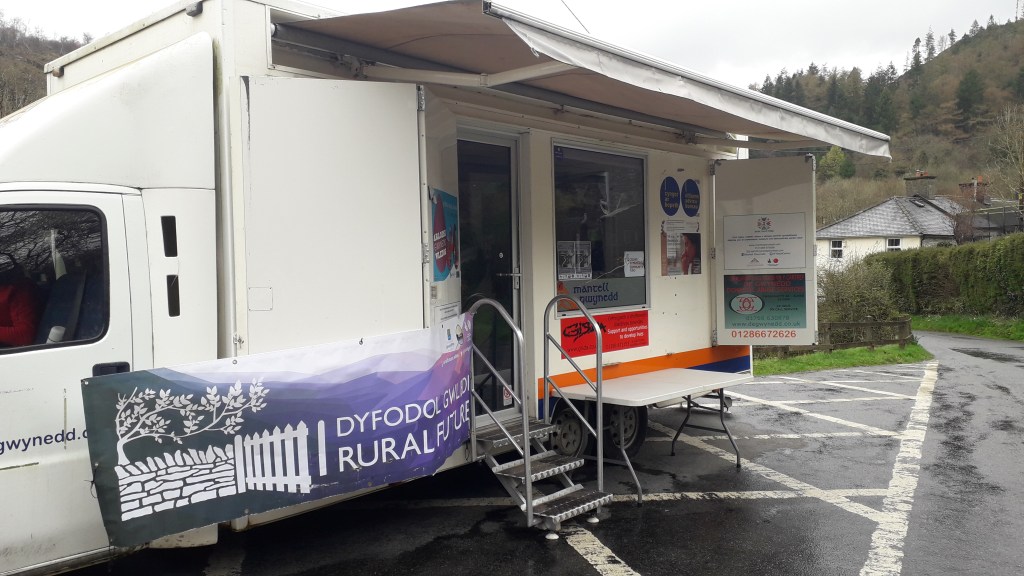
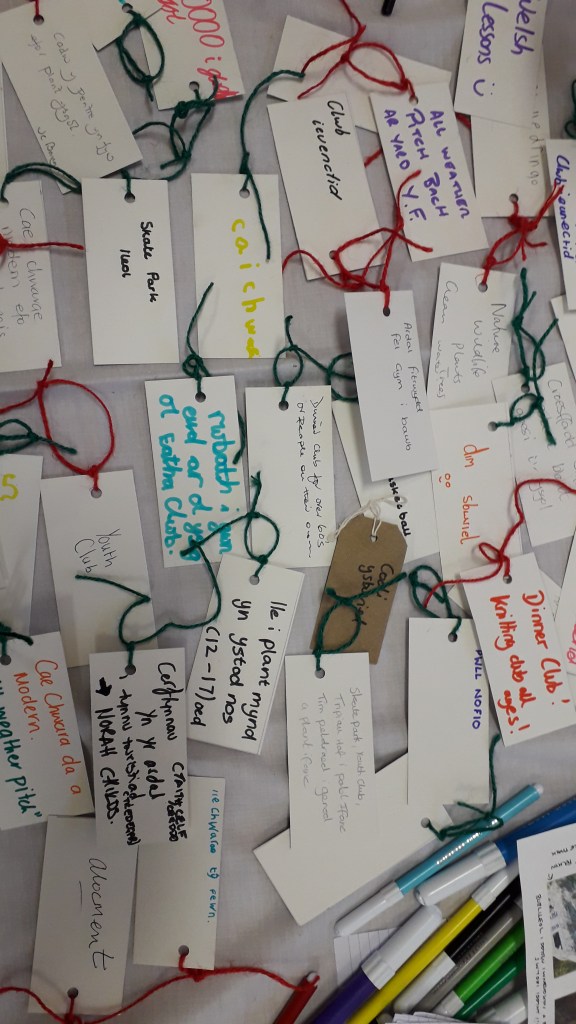
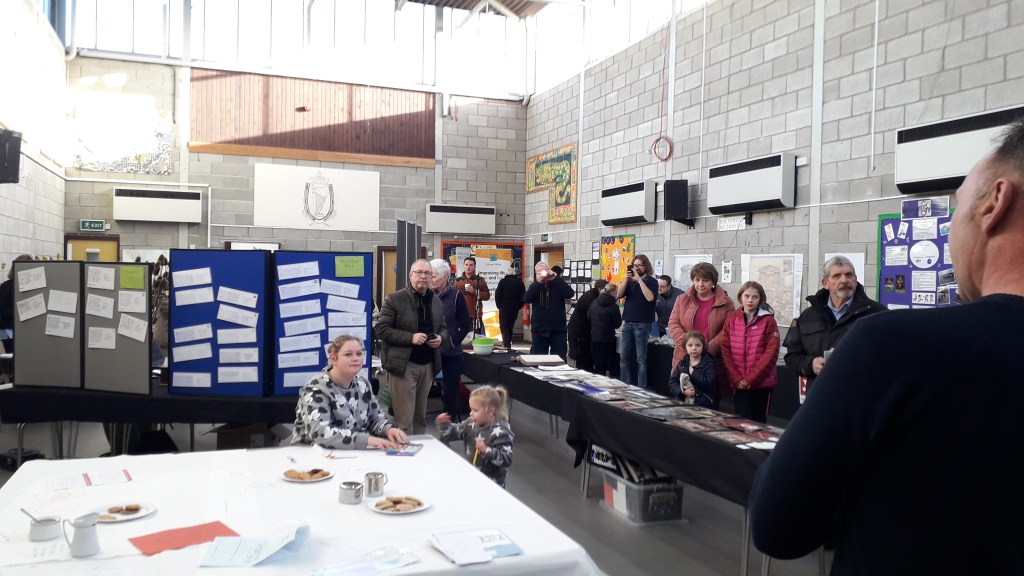
Cafodd pob Stiwdio Stori ei siapio gyda’r gymuned. Penderfynwyd gyda’i gilydd beth oedd yn bwysig, sut roedd pobl eisiau cael eu gofyn, a beth oedd ei angen i greu lle digon diogel ar gyfer gonestrwydd. Roedd y dulliau’n syml ac yn chwareus: defnyddio tebotau i gasglu sgiliau, mapiau rhyngweithiol, gwneud a sgwrsio ochr yn ochr. Cynhaliwyd y rhan fwyaf o’r stiwdios mewn neuaddau pentref. Trodd y breswylfa olaf yn Fws Stori – trelar a fan lab dyfodol – gan ganiatáu i ni siarad â phobl oedd yn pasio heibio, gan adleisio’r traddodiad hŷn o faniau’n cyrraedd pentrefi gyda straeon a gwasanaethau.
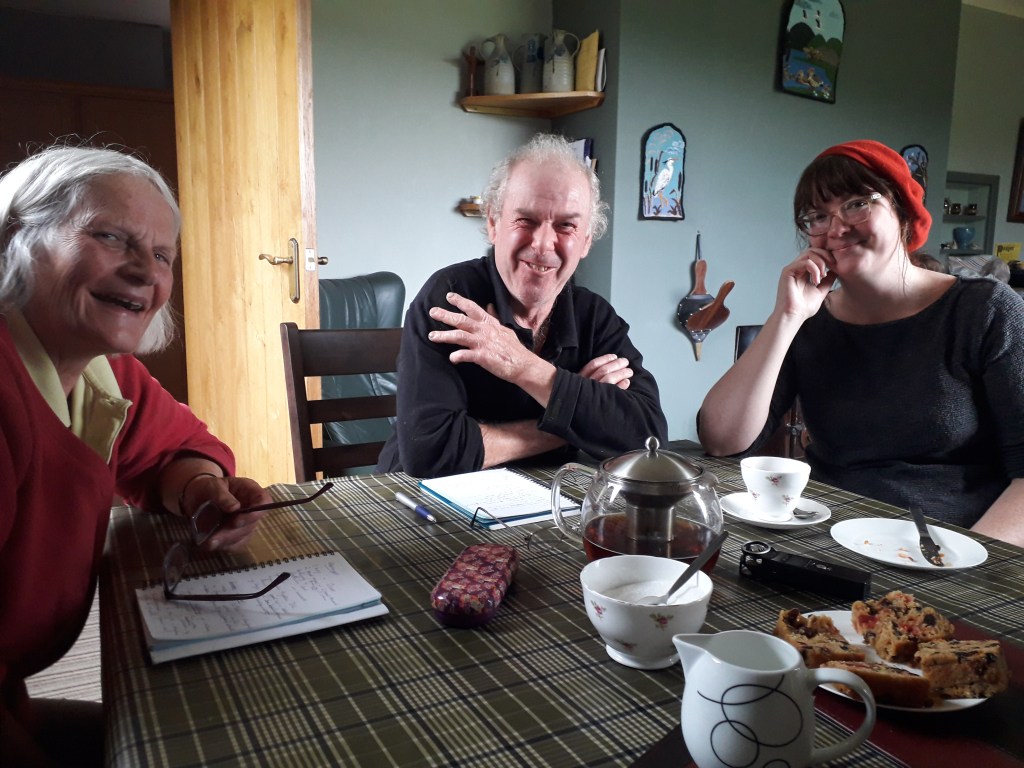
Cysylltodd y gwaith bobl â’i gilydd ac â rhwydweithiau ehangach: grwpiau cymunedol, Amgueddfa Lechi Cymru, Menter Môn, Menter Maldwyn, Say Something in Welsh, gerddi cymunedol, banciau bwyd a’r heddlu cymunedol. Yn bwysicaf oll, cynhaliwyd y gwaith gan y cymunedau eu hunain, a ddaeth â the, cacennau, straeon a syniadau, gan siapio’r hyn a ddaeth y stiwdios i fod.
Roedd y preswylfeydd yn brofiad ar y cyd, wedi’u datblygu ochr yn ochr ag artistiaid eraill gan gynnwys Kristine Luke a Zac Dutton. Mae’r gwaith hwn wrth galon iknowmeism: celf fel ffordd o wrando, dal gofod, a gweithio ochr yn ochr â phobl i greu amodau lle gall sgyrsiau go iawn ddigwydd, ar eu telerau eu hunain.
Dyfodol Gwledig // Story Studios (2018–2019)
Between 2018 and 2019 I worked across four rural residencies in Llannerch-y-Medd, Glantwymyn, Penmachno and Deiniolen. I was part artist in residence and part curator, holding the overall shape of the work while being embedded in each place.
I developed what I call Story Studios. These were temporary spaces where people could tell their stories and think about the future, in ways that felt familiar and safe. The work fed into a wider programme of consultation with Bro Cymru and Severn Wye Energy, but the studios themselves were led by the communities they sat within.
The way I work is through situated facilitation. That means paying attention to where we are, who is in the room, what language is spoken, what histories are present and what power is already at play. Nothing is dropped in or rolled out. The questions, the pace and the methods shift depending on the place and the people.
My role was to design the conditions and then stay responsive, listening and adjusting as the work unfolded.
The Story Studios were co-produced with Severn Wye’s community development team. This mattered. The artistic work and the community development work were not separate. I felt empowered that the community would benefit of the direct framework provided by Bro Cymru and Severn Wye.
We worked alongside each other, sharing insight, grounding ideas in lived reality and making sure what surfaced through the studios could connect to longer-term support and action.
I worked closely with local agents already rooted in each area, sharing facilitation skills and experimenting together with how to ask better questions. Being a Welsh-speaking artist in largely Welsh-speaking communities allowed me to work with nuance and difference. Even between rural places, the perspectives, rhythms and priorities were distinct.
Although the starting point was rural poverty, conversations quickly widened into the realities of rural life: isolation, transport, housing, the loss of shared spaces and the quiet, ongoing work of holding communities together.
Each Story Studio was shaped with the community. We decided together what mattered, how people wanted to be asked, and what would make the space feel secure enough for honesty. Methods were simple and playful: teapots used to collect skills, interactive maps, making and talking side by side. Most studios took place in village halls. The final residency became a Story Bus, a trailer space and future-lab van that allowed us to meet people passing by, echoing the older tradition of vans arriving in villages with news, services and stories.
The work connected people to each other and to wider networks: community groups, the National Slate Museum, Menter Môn, Menter Maldwyn, Say Something in Welsh, community gardens, food banks, community police. Most importantly, it was sustained by the communities themselves, who brought tea, cake, stories and ideas, and helped shape what the work became.
The residencies were collective by nature, developed alongside other artists including Kristine Luke and Zac Dutton. This period sits at the core of iknowmeism: art as a way of listening, holding space and working alongside people to create conditions where real conversations can happen, on their own terms.
More about Rural Futures can be found here
 Naomi heath